
dejar un mensaje
Si está interesado en nuestros productos y desea conocer más detalles, deje un mensaje aquí, le responderemos lo antes posible.
Over the past few years, China’s electric vehicle (EV) industry has experienced explosive growth, reshaping not only the global automotive manufacturing landscape but also the worldwide automotive aftermarket and refinish industry.
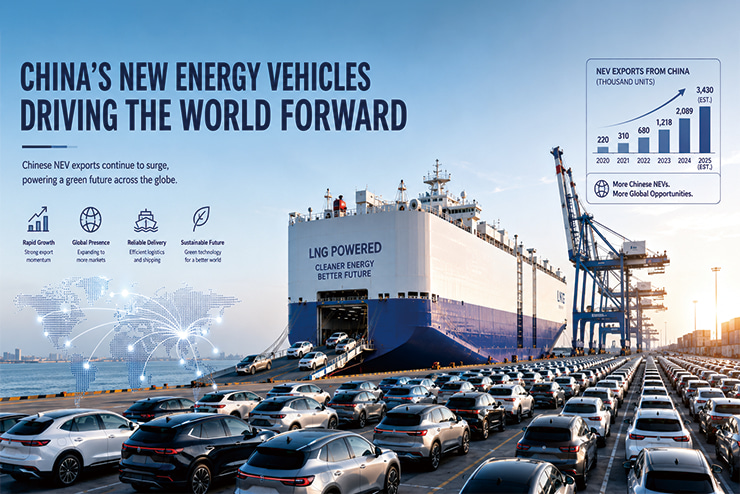
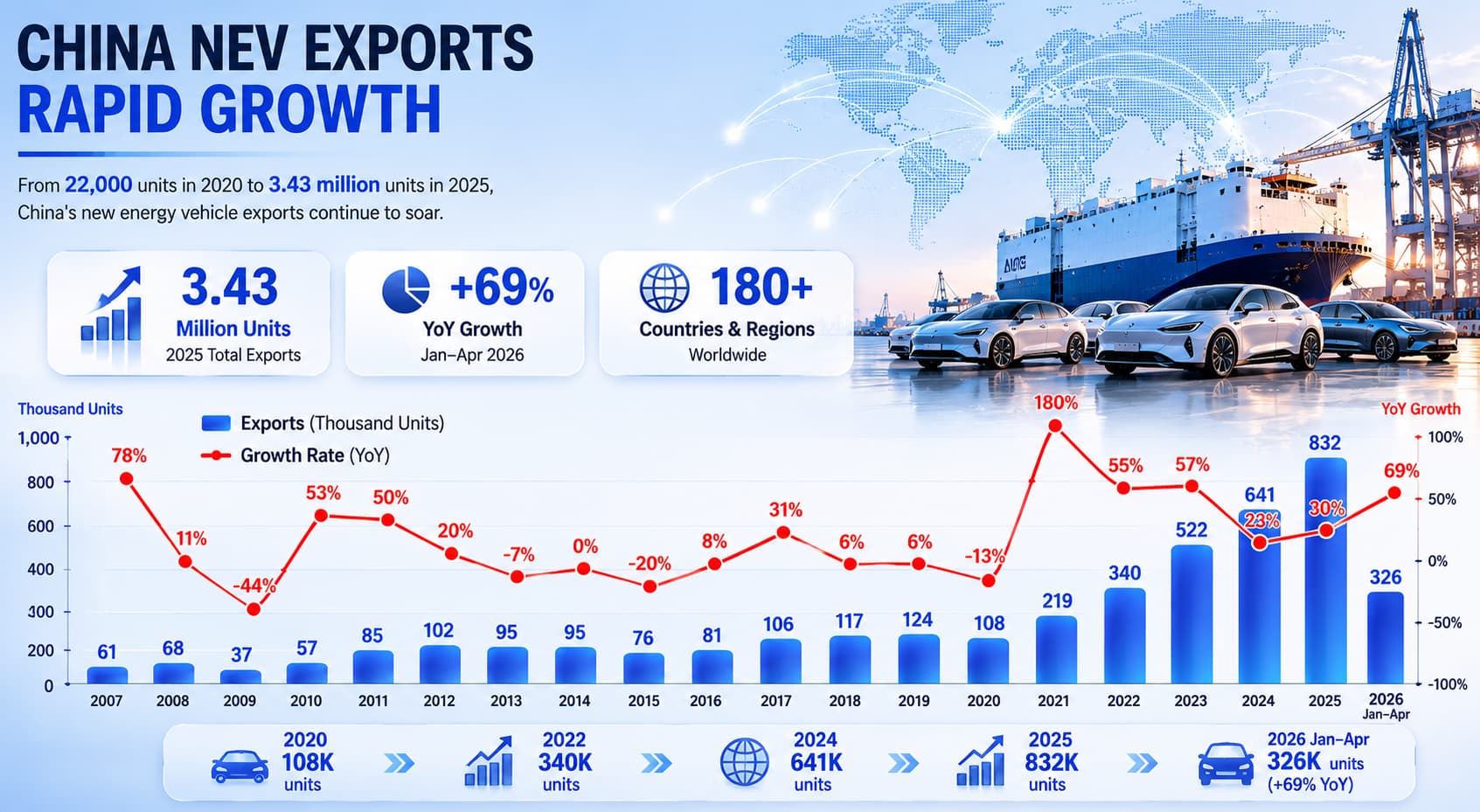
According to industry statistics, China’s EV exports have continued to surge at an extraordinary pace. Export volumes increased from approximately 220,000 units in 2020 to more than 3.43 million units in 2025 — a growth of over 15 times in just five years. In the first four months of 2026 alone, exports already reached approximately 1.47 million units, representing year-on-year growth of around 69%.
At the same time, countries such as Brazil, the United Kingdom, Australia, Thailand, Germany, Israel, and Mexico are rapidly becoming key overseas growth markets for Chinese electric vehicles.
As more Chinese EV brands enter international markets, a new industry trend is becoming increasingly clear:
Chinese electric vehicles are not only transforming vehicle sales markets — they are also reshaping the global automotive refinish industry.
For the automotive refinish industry, vehicle sales are only the beginning.
As the number of vehicles on the road continues to grow, demand for collision repair, insurance refinishing, spot repair, and body restoration also increases accordingly.
For the past decade, the global automotive refinish market has been largely centered around European, American, and Japanese automotive brands.
Today, however, more body shops are encountering Chinese EV brands such as:
For many overseas body shops and distributors, this represents both a major opportunity and a new technical challenge.
In the EV era, automotive colors are no longer limited to basic white, silver, or black finishes.
To enhance brand identity and create a stronger sense of technology and premium styling, Chinese EV manufacturers are continuously introducing new OEM color systems with highly sophisticated visual effects.
These new-generation automotive colors often feature:
Ultra-fine metallic particle technologies create richer visual layers under different lighting conditions.
Multi-layer pearl structures produce greater depth, brightness, and premium appearance.
Colors change in tone and brightness depending on viewing angle and lighting.
Many Chinese EV manufacturers now use independently developed color systems rather than traditional automotive color databases.
This creates a major challenge for collision repair shops:
Even when the vehicle model can be identified, achieving accurate color matching is no longer easy.
Many overseas refinish shops are discovering that traditional color matching systems often face significant limitations when repairing Chinese electric vehicles.
Common issues include:
New vehicle models are released faster than traditional color databases can update.
Special pearl and metallic structures often create large color deviations with conventional formulas.
Technicians must repeatedly spray test panels to achieve acceptable color accuracy.
Color mismatches increase customer complaints and lead to costly repainting work.
For body shops, these problems ultimately translate into:
As the global population of Chinese electric vehicles continues to expand, demand for accurate Chinese EV color formulas will grow rapidly across the automotive refinish industry.
For distributors and body shops, the ability to access Chinese EV OEM color formulas quickly will become a major competitive advantage.
Over the next several years, competition in the automotive refinish industry will gradually shift from:
to:
This shift is already beginning.
To support the rapid growth of Chinese electric vehicles worldwide, WISETONE PLUS continues to expand its Chinese EV OEM color database.
As a professional automotive refinish paint solution provider serving global markets, we understand where the future of automotive color matching is heading.
By combining a more complete automotive color database with highly accurate color matching technology, WISETONE PLUS helps body shops maintain a competitive edge in the EV era.
The rapid growth of Chinese EV exports means more than just increased vehicle sales worldwide.
It also means the global automotive refinish industry will soon face increasing demand for advanced color matching solutions.
For distributors, body shops, and automotive paint brands, now is the critical time to prepare for the next generation of Chinese EV color technology.
The future opportunity lies not only in electric vehicles themselves, but also in the growing repair and refinishing demand behind them.
And in this new era, accurate and efficient color matching capability will become one of the most important competitive advantages in the automotive refinish industry.

Dirección de la oficina de Hong Kong (ALL GOOD (CHINA) LIMITED): Piso C, 17/F, 11-15 Kennedy Town Praya, Hong Kong SAR


 Red IPv6 compatible



 中文
中文